Ghost stories

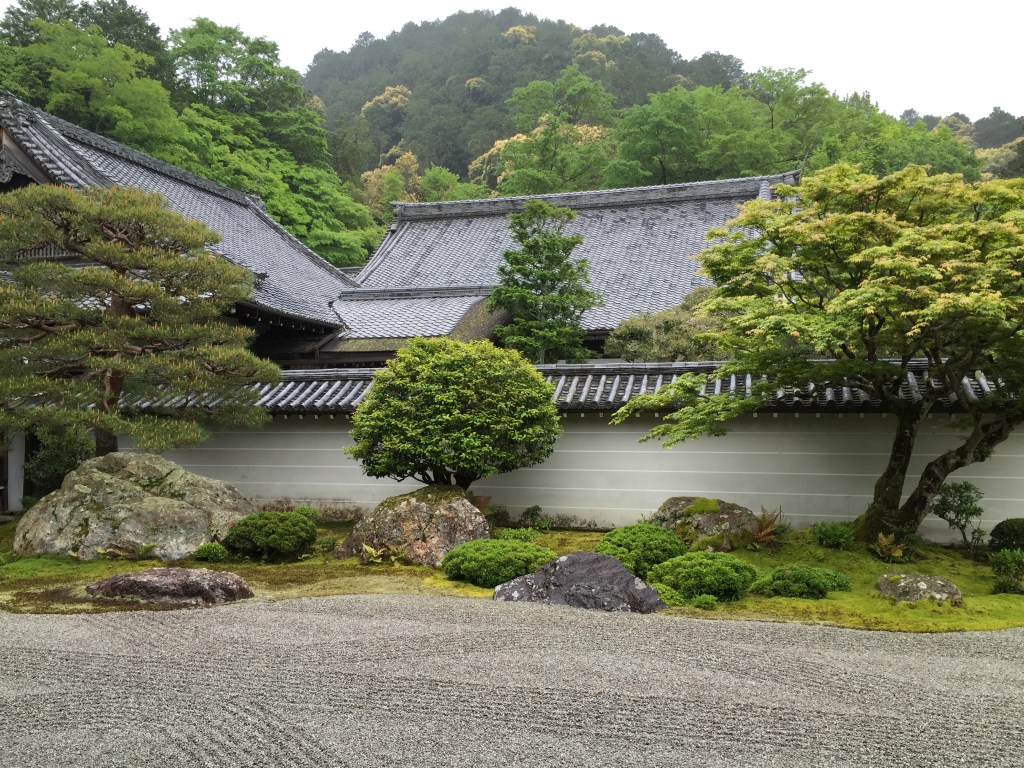
When I was very young I was frightened at night of my grandparent’s home in Tokyo because I was convinced that there was a ghost that lived in the hallway (do ghosts “live” anywhere?). In tears I confessed my terror to my grandmother, who, in a quiet matter-of-fact manner, told me that the best way to take away a ghost’s power was to acknowledge it by its name and ask it to stop bothering you. Thus, that evening in that dark hallway, holding my grandmother’s hand, my quivering 5-year-old voice asked Mr. Ghost to leave me alone. He never bothered me again.

It’s human nature to turn away from things that frighten us, part of the fight or flight response to which human action is sometimes reduced. I would argue that those are not the only two choices available. My grandmother wisely posited a third option; to face the thing with equanimity, to acknowledge its existence, and to find a way to live in harmony with it.
These days I find that my emotions are heightened and I’m more prone to an instinctive fight-or-flight response. Some days it’s almost as if I want to put my fists up to any bit of bad news (as if I could really fend it off) and angrily rail against the world; on others all I want to do is flee from the bleak state of things, to avoid it completely, to pretend it doesn’t exist. Neither response is really helpful, of course, and reacting this way exacerbates both my depression and anxiety.

As I’ve written before, it’s immensely challenging for those of us who struggle with mental health issues to navigate these tempestuous times; the instability we face at every breaking news update can’t help but intensify the volatility of our own internal states. It’s challenging not to get into a vortex of anxiety.

And although I know I can’t always follow my own advice, if this sentiment resonates with you, I give you the possibility that we need not turn to the harmful poles of fear or fright. Rather, let’s turn to face that which causes us strife, and see it for what it is, without judgment. Acknowledging it, accepting its existence and moving forward inspire of it – this is the best thing we can do for ourselves.

What is your tendency – to fight or to flee? Have you found yourself more angry or more afraid?

My task today: to get outside even though it’s moody cloudy grey day and I don’t feel like running (the activity that usually gets me out of my house). Just finished a leisurely 2 hour bike ride (done!)
Odes

If you’re in the orchestra business or are a huge fan of classical music, you’ve probably seen these videos; they’ve been widely circulated now for nearly a week.

But if you haven’t I really think you should take a listen.

Social distancing and shelter in place directives have disrupted not only our work but our workplace relationships, and this disruption is magnified for members of a symphony orchestra. The close personal relationships that develop among musicians make most orchestras akin to a (slightly dysfunctional) family, with all the concomitant intimacy and conflict.

But those are the kinds of relationships required to build the trust that’s requisite of the soul-revealing nature of a musician’s work. Orchestral relationships feel almost familial, and so to suddenly be separated from one’s musicial siblings or cousins is a heavy psychic blow as well as an interruption of the cooperative work that is at the heart of an orchestra.

The musicians in these videos have created them for many reasons: a desire to do what feels as natural as breathing, to continue their craft, to perform, to serve their communities and the world through the healing properties of music, to create moments of beauty and joy in a time where both seem lacking. But at the heart of it is their connection not just to the music but to each other.

At its best, an orchestra is a distillation, in miniature, of an ideal society, in which individuals bring their unique talents and, together in harmony, create something that is so much more than the sum of its parts. It’s an expression of love that is at the same time personal, and communal, and universal. And it can create moments of true connection and joy.

Below is the orchestra who started it all, the Rotterdam Philharmonic, followed by my friends, the Toronto Symphony.

What experiences have you had in which a joint effort created something truly beautiful?

My task today: try something new on social media, a way to reach out to people in different ways. It took all morning but I made an Instagram story about fashion during quarantine (done!)

Hang on

I’m having one of those days where an underlying anxiety is rubbing against me, a pebble in a shoe that, though not painful, is a constant distraction and discomfort. Focusing on anything is a colossal effort and putting words to paper (metaphorically of course) feels like a monumental chore.

Anxiety, even that quiet, submerged kind, is exhausting. It’s spirit-sapping in the most elusive way, and I often don’t realize what’s going on until late in the day, when my tired body is ready to power down but my mind is still firing on all cylinders. I feel wired but completely out of focus.

A beautiful day to feel anxious

Anyone who lives with an anxiety or panic disorder know this feeling, of being on the edge of something, hanging on by our fingernails. And since all energies are being funneled to that perceived threat to basic survival, there’s very little mental space to dedicate to anything else.

Which is all to say, I’m anxious today, and I would most likely be anxious even if we didn’t live in an uncertain and anxiety-filled time. And I have no comforting words to offer myself or to anyone. Except, perhaps, hang on, hang on. Breathe and be still.

Do you have a mantra you turn to when gripped by anxiety?

My task(s) today: finish a list of suggested edits for Act I of a score I’m reviewing on contract (done!). Loosen the grip on my mind enough to let me sleep tonight (working on it!)

Past life

I’ve been spending a little more time doing things around the apartment lately, as I know many others have. There are piles of music that need to be put away, a closet full of clothes that haven’t been sorted in over a year, a filing cabinet to be organized, a messy bathroom cabinet that need to be cleared of empty tubes of toothpaste and expired contact solution.

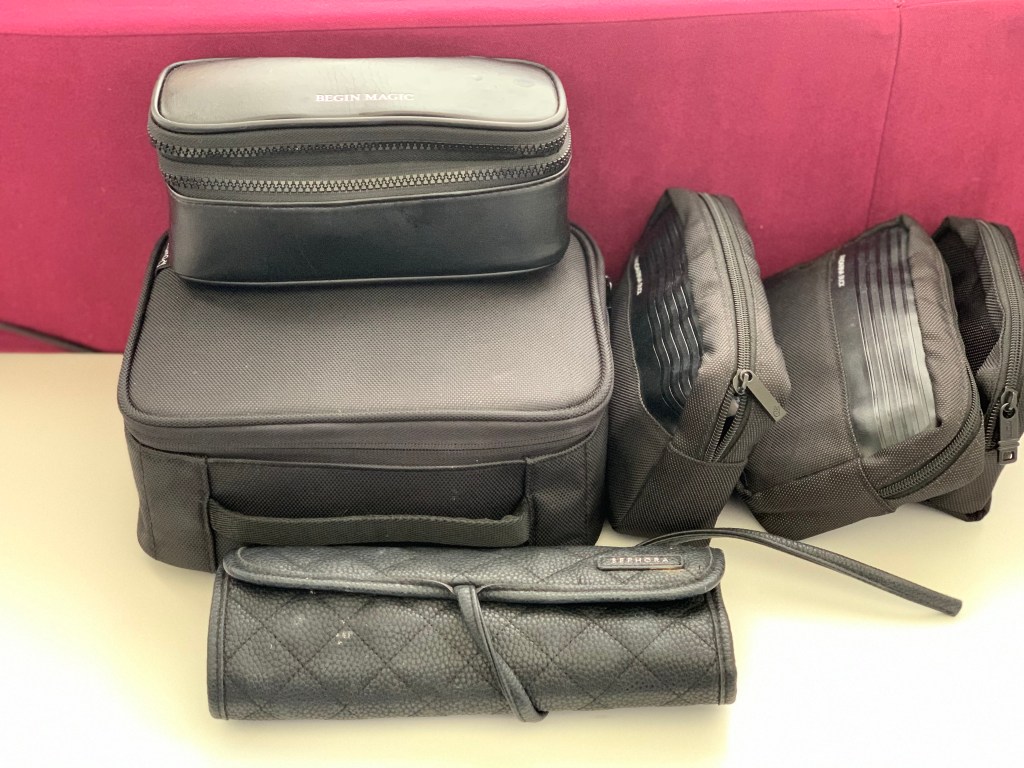
As I was cleaning my little studio/work room, I realized I was still dedicating shelf space to my carefully packed travel kits of toiletries, tech organizers, makeup brushes, chargers, medication.

I’m used to having a lot of things packed and organized so that they can go straight from one suitcase to another. I even have packing cubes of concert clothes ready to go at all times.

Looking at these now it feels a bit surreal, as if they are artifacts from some distant past. It’s barely been two weeks since the first email announcing a canceled concert, but already it feels like it was a past life.

In some ways I think it’s adaptive. I’ve always made it a point to adjust as quickly as I could to any new situation, which is crucial if you’re traveling across multiple time zones – otherwise I would never have survived my travel schedule.

But it’s also self-protective – holding on to what life was like BC (Before COVID) wouldn’t serve me in the present, which is both logistically and emotionally completely different. I need to put that lifestyle aside for the moment, and, for my own mental health, to be present for life as it is now.

I think we all look forward to the time when some sense of normalcy will return – accepting, of course, that the world has been inexorably changed. And I’m not saying that we can’t long for that day. Rather, it’s useful and necessary to accept the world as it is now, to welcome the present, regardless of whether it seems hospitable or not.

I know that my future holds concerts and colleagues and travel and adventure, and I can’t wait for that day. In the meantime, I’ll continue to embrace the present as best I can, because doing so will connect me to what’s real and, hopefully, this will bring me some peace.

I forgot my question and task yesterday, sorry! Here’s today’s lot:

How do you react to difficult situations?

And my task: finish cleaning my work room. I got a bit sidetracked by writing this post, and I need to get back to it (not done…yet!)

Reversals

I’ve been spending a lot of time talking to my mom. I know many of us have been reaching out to our parents (and exhorting them to stay home!) and worrying about their well-being.

Mom has lived alone for 20 years, since my dad died (I’ve written about this on my other blog here.) She’s in Hawaii, and I was just there moving her out of the house in which I grew up and into a condo that would be easier for her to maintain. She’s 76, vibrant, engaged, and healthy, but as she’s a non-native English speaker who has only a perfunctory mastery of the language (and you really can get away with speaking only Japanese in Hawaii) I’ve been handling most of her affairs for decades.

It’s hard being apart from family in times when you want to circle the wagons, be together, protect each other. As someone who has spent most of their life away from family, it’s somehow doubly so. Compound that with the fact that I’ve felt like the caregiver for most of my adult life…well, you can imagine those feelings are complicated.

As complicated as it may be, I know it’s been an opportunity for me to reexamine my relationship with my mom, and what she actually needs versus what I think she needs. I was deeply concerned about her when the official “stay home” order was announced in Honolulu – how would she take care of herself, get her groceries, occupy her time if she couldn’t go to the Y or meet with her art groups or have people over?

Turns out that she figured out when senior hours happen at the grocery store, has made phone dates with all of her friends, has reformed her haiku writing group online and stocked up on old movies she wants to watch. More resourceful that I’d imagined.

Looking after aging parents is both challenging and beautiful, a duty and a privilege, holding the complexity of seeing your past and present and future in them. And it all seems so much more magnified when our own nerves are on edge and we’re struggling to manage ourselves and we’re feeling out of control in a shifting and dangerous world. We want to protect them as they once protected us, but the role reversal is not so simple or straightforward; there’s too much baggage from a lifetime together.

For now I’m doing all I can to leave that baggage behind, to support her, from a distance, as well as I can, and care for her as she always has – and does – and will – care for me.

Sadly ever after

I’ve always been a big fan of the unhappy ending, in books, in movies, in theater. I used to think I was an outlier in this but have since discovered a huge cohort of fellow lovers of a good tearjerker.

I can’t speak for anyone else, but there are a few ways in which I can explain my preference for a non-fairytale ending.

First of all, real life is rarely about fairytale endings – they tend to be far more ambiguous, if there’s even any closure at all. Sad endings feel like a truer reaction to actual life, and that makes it more resonant for me.

Second, when experiencing a character’s loneliness or loss, it feels like a kinship – that it’s a reflection of what I sometimes feel myself. Knowing that those emotions are shared, that they are universal, is deeply comforting.

Finally, a sad ending is often the catalyst of a good cathartic cry.

Opera, of course, is the epitome of sad endings, and one of my favorites is La Bohème (I freely admit my bias – it’s one of the half dozen or so operas I’ve conducted in their entirety, so I know it inside and out). No matter how many times I’ve seen it (or conducted it, for that matter), the closing scene really gets to me. By the time Rodolfo has gotten to “Quel guardarmi cosi?…” the tears are already springing to my eyes. And those big chords in the brass and the sobbing strident strings and…it’s just beautifully, gloriously, sublimely sad.

I happened upon this production of Bohème when I was doing a YouTube search for something else. It’s an unusual and fascinating idea – staging an opera in the middle of an actual city square, with passers-by gawking at the spectacle. But what really struck me was the staging at the very end, of Mimi’s death – incredibly visceral and totally unexpected. It was a really good cry for me. Hope it is for you as well.

XOXO

I’ve been using that sign-off for more and more emails lately. Not in response to business-related stuff, of course, or to people I barely know. But for friends with whom, in the past, I would have logged off with “See you soon!” or “Sending good vibes” or even “Love”, I’ve taken to adding those extra letters.

It’s a small detail, but I wanted to address it because it wasn’t a conscious decision on my part, just something I started doing these last few days. In this time of isolation where actual contact has become nearly impossible, we’ve all been reaching out virtually to each other, being more honest with our emotions, to keep those connections, to toss each other life vests as we try to keep our heads above water.

A friend of mind FaceTimed me today, one I mostly see when I’m working in the city in which she lives, whom I adore but am rarely in touch directly. Our conversation touched on all the things you would imagine – the unprecedented state of the world, our loss of work and income, the things we were doing to care for our minds and bodies – and as we were wrapping up we both shared how the lives we were leading just a few weeks ago seem utterly surreal seen through the lens of the present.

Giving voice to that disconcerting feeling was a visceral reminder for me that while my friend and I had a shared history from a different time, we also shared a present that, though unnerving, was something that bound us together. To understand that the present is mutually experienced – that thought drew me not only into the exquisite acceptance of being in the moment but also made me realize that there was someone there with me, that we are not alone.

Sharing this present, no matter how frightened we are – it holds all the meaning, all the strength we need.

How do you find connection over distance?

My task for the day: vacuum, change the sheets, clean the bathroom. Simple chores around the house that give me a sense of normalcy and create a calm environment (done!)

xoxo

S

Who what why

It’s been nearly two weeks since I’ve performed and that feels like an eternity.

To be fair, the longest period I’ve gone without a concert was 3 1/2 weeks last August (which felt really glorious then!), but somehow it feels different now. Not working for long periods of time makes me feel untethered.

I think that as musicians, much more that those in other professions, our identity becomes wrapped up in what we do. We self-identify as musicians, as if it were a culture, or a tribe. So when I’m not doing what I usually do – making music in front of a lot of people – that taut, intimate connection between what I do and who I am starts to loosen, unravel.

It’s the kind of feeling that could precipitate an existential crisis, and that’s not something I need on my plate right now. But it’s absolutely challenging to sit with the thought that the way I define my place in the world is by the connections to people I create through music. If I’m not actively forging those connections, what’s my purpose, and who am I?

I know that’s a huge questions and one that doesn’t lend itself to a pat answer. And in the past, that fact in itself would have discouraged me from continuing to explore both the feeling and the question. But now I find myself with time on my hands, with no ensemble and no audience, just my own determination to find a way to determine myself. So many of us stuck in our homes right now are grasping for some silver lining to the dark cloud of our situation, and perhaps this is mine – a pause, a moment to focus on being in a life that is all about doing.

How do you separate your doing and being?

My task for the day: take stock of everything in my pantry. My patient husband found an app for that. It took all morning but…done!

C-

If I had to rate today it would be well below average. Like, a C- (for those non-American readers that’s a just-barely-passing grade).

I woke up today with a vaguely claustrophobic feeling of being stuck somewhere I didn’t want to be, and that sense of malaise has followed me all day. So today it’s hard to write, that’s when it’s important to write.

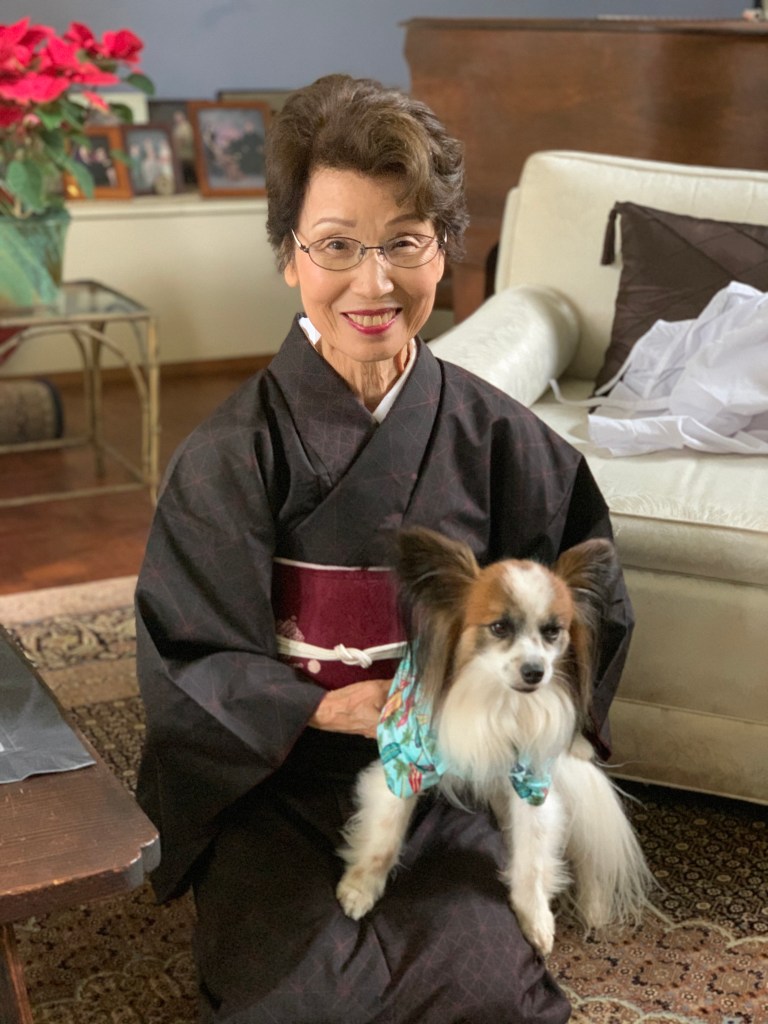
I’m half Japanese – I was actually born in Tokyo, where my mother’s family lives – and was raised with a strong sense of its culture. The Japanese tend to be a stoic people, and that stoicism has often served me well. There’s a fantastic Japanese phrase, しょうがない, shouganai, which means roughly “there’s no way”, and the very ambiguity of it leads to countless usages. And although it’s usually used in unpleasant situations, in many ways it has a neutral connotation, resigned but willing to work with the reality at hand.

Today I looked at the world and thought, shouganai, and went on with my day as best as I could. Whereas the Western temperament might shun any sense of hopelessness, the Japanese character is one that would accept it as a state of things and keep going despite it. As I said, stoic.

So, today, that’s all I’ve got for you. I’m in a rough spot but I’m willing to accept it (both the state of the world and my perception of it) and keep plodding forward both because of and in spite of it.

My question to you today: if “there’s no way”, how do you create a way?

And my task: spend at least a few hours doing some music review work, even if I don’t know when it will be performed (done!)

Hoping that tomorrow might find me in a better state.

Filling the units

Many of us have been spending a lot more time Netfix-and-chilling these days, and yesterday I came home from my walk to my husband watching the 2002 charmer “About a Boy” (last week I found him watching “Contagion”. He’s pretty hardcore.)

The main character, Will (played with floppy-haired perfection by Hugh Grant) is happily unemployed and living off of the royalties from a famous Christmas song written by his father, and to organize a life unencumbered by responsibility or schedule, he’s figured out a system for himself:

“I find the key is to think of a day as units of time, each unit consisting of no more than thirty minutes. Full hours can be a little bit intimidating and most activities take about half an hour. Taking a bath: one unit, watching “Countdown”: one unit, web-based research: two units, exercising: three units, having my hair carefully dishevelled: four units”

About a Boy

I was FaceTiming with some friends last night who were bemoaning the suddenly unstructured time they had as they were forced to work from home, and it brought to mind those units of time, and how as musicians, creating these structures are often a way of life. Let me explain.

I like using colors…

Many conventional workplace norms involve imposed schedules and coherent deadlines. Team meetings take place every day at 9 am; the feasibility study is due in April; the client is expecting the design draft by EOD Friday. One operates in response to external requirements.

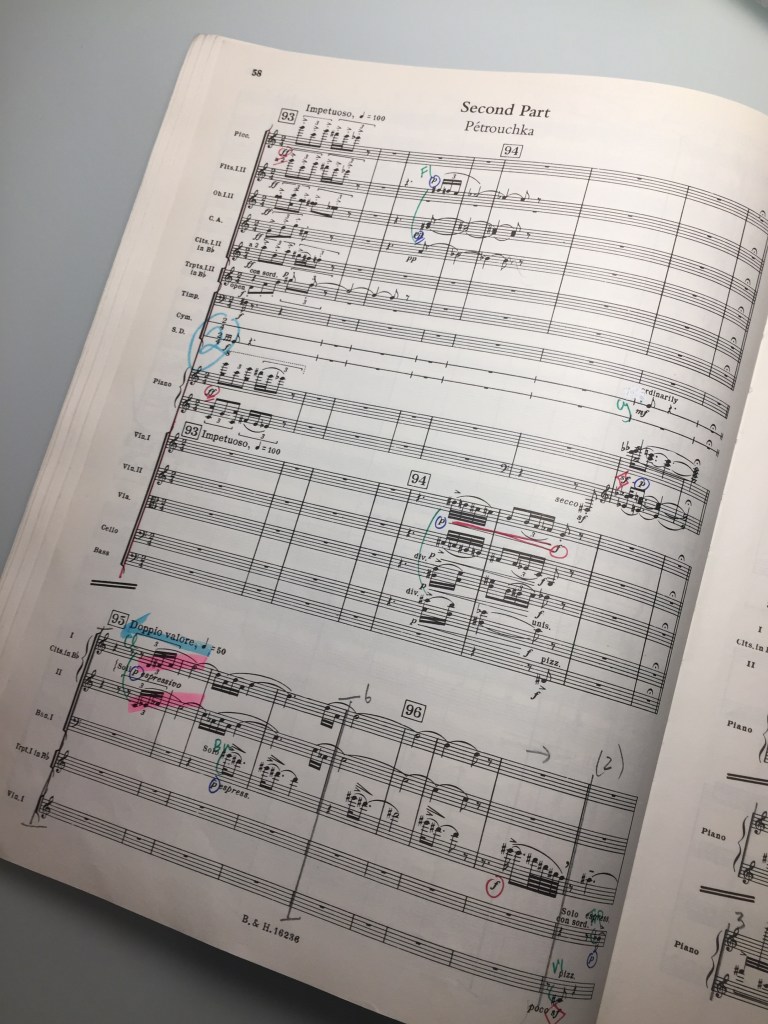
It’s a bit different for musicians. On one hand, there are definitely coherent targets; any given performance is on a specific date, and we need to be prepared. And for those who work for larger organizations (orchestras, opera companies), rehearsal periods themselves are scheduled months ahead. In a larger sense, musicians have deadlines.

On the other had, being prepared for those scheduled deadlines is far more nebulous. A huge amount of any musician’s time is spent practicing – soloists may do so for hours a day. It’s something that’s done on one’s own schedule, so the first task is to set aside units of time daily (you can’t just do all your practicing in, say, one 15-hr day, as neither the human body nor mind really works that way!). That requires an understanding of one’s own learning process, how difficult the music might be, how much practicing is actually feasible in a single day and how many days/weeks of preparation before the performance/rehearsal might be needed.

Then there’s the whole notion of when you’re “ready” for a performance. There’s no empirical benchmark; at minimum you need to be able to play the notes on the page, but there’s nuance even in that basic concept, never mind what it means to be “comfortable” with a piece of music or to have “mastered” it. It all lives in a grey space.

Which is all to say that as musician we are required to master not only an instrument, but also time management, personal goal setting, self-discipline and accountability to oneself (which feels really different from accountability to something/someone else). Which, in a strange way, is what’s required of all of us trying to figure out how to organize stuff and get things done as we are stuck in our apartments all day.

I’ve found that identifying goals for each day, giving myself time limits and holding myself accountable to outcomes gives me a sense of dominion that is entirely lacking in these uncertain times. And having even that small sense of control, at least over my own actions over a single day – or 48 units according Will – keeps the worst of my anxiety at bay.

For many of us it’s important to establish a sense of routine even if our normal patterns of activity have been utterly changed. And I think it might be interesting to break out of the notion of hours and minutes (and the baggage that those very words may bring with them) and reframe our day in terms of units, to see if it can help us map out our lives.

So, my question for the day: what would a unit of time be for you? And what would your day look like if you organized it around the principle of units?

I forgot to write about my task yesterday, which was to make sure our elderly neighbors were stocked up with groceries (they were) and if they needed us to get them anything (“vodka”, they said with a smile). (done!)

My task today: go through toiletries/products/makeup and toss out things that are expired. I have 3 sets of everything (one set at home, one kit that is with me when I’m traveling, and a 3rd that’s sitting in the suitcase that’s packed for the next week) so it’s more comprehensive than you might! Might take more than the two units that I’d planned…