What comes next?

I started this blog the day the shelter in place mandate took effect here in San Francisco, and the original intent was to blog daily for the length of that first mandate (21 days). As it was extended, I decided to continue for another 21 days. Today, at the end of those 21 days, the mandate was officially extended to May 30.

A shot from April 27 of last year. It feels like a lifetime ago…

So, my question to myself is, what comes next? I had hoped initially this diary would cover a month or two, at most, but at this rate it will be a minimum of 10 weeks, and most likely it will be more.

Diaries are personal by nature, and I’ve certainly shared with you many of the things I’ve been going through as I navigate through these unfamiliar waters. But I’m also mindful that in making a diary public, I don’t want it to just be about me – my hope is that my entries provide readers an interesting point of departure, or a new perspective, or a laugh, or a moment of reflection, or a brief distraction, or a comforting, daily constant.

My question to you: should I extend my daily blogging until May 30?

I know I know, that’s a question I should really answer for myself, but I just couldn’t resist putting it out there.

My task: answer a long and involved email from a friend who is struggling with a relationship during this lockdown. It’s a lot to think about and I’ve been hesitating to answer because I don’t know if I can be helpful in any way. (Not done yet, although I have a few hours before bed…)

Tastes like home

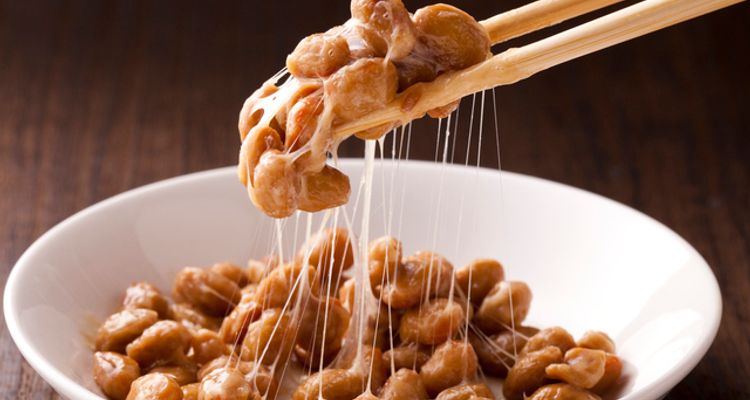
This is Nattō.

It’s a Japanese dish made of fermented soybeans. It has a distinct smell and a very…unique…texture. It’s a nutrient-dense food that’s also full of probiotics. It’s an acquired taste, even for the Japanese (nearly a third of the country detests this stuff). It’s all I want to eat these days.

A lot of us are stress/boredom-eating lately, and that’s totally understandable. Food can be a comfort, or a distraction, or a pleasure, and we definitely need all three. But we all turn to different comfort foods, and it’s been fascinating to see this play out among my friends and family.

Some turn to the classics, like mac and cheese, or chocolate. One has been eating toast with peanut butter daily. One has been baking and eating banana bread constantly. My husband is partial to Cheez-Its.

The fact that I want a sticky, smelly, fermented clump on top of rice makes me a bit of an outlier, but it makes all the sense in the world when you factor in that my mother fed me a lot of it as an infant. And now it reminds me of simpler times, and gives me a feeling of warm familiarity and security.

We could all use a little security these days, and if we can find a little of it in the food we eat, we should celebrate it. What foods have you found yourself turning to?

My task: speaking of nattō, we just ran out (my husband, who is decidedly not Japanese, actually loves it almost as much as I do, very unusual!) and I need to stock up with a run to the Japanese grocery store (done!)

Every little thing

…is gonna be all right.

Twitter can be a strange universe of extreme opinion flying left and right, but there are also some gems, like this. Unexpected, charming, joyfully comforting. There are so many ways to express ourselves, to connect with each other, and each of us have our own unique gifts and perspectives. I hope this makes you smile as much as it did me.

What unexpected moment of joy have you encountered lately?

My task: to go on a bike ride with my husband. San Franciscans are a famously outdoorsy lot, and I knew everyone would be riding on this beautiful Saturday morning. A rare opportunity to share some time in the company of others as we zoom past each other on the bike paths (done!)

Down the rabbit hole

I came across this today and thought it was a perfect illustration for many of us in the live music business.

It’s been really interesting, from a larger cultural perspective, to observe the role of music during our isolation; by all accounts, everyone is listening to much more of it. And when I say listening, it’s not just in the forms that we usually imagine – tracks, albums, videos, live on Instagram – but also in the arenas we don’t usually think about, like in film and series/shows on streaming platforms. Music is everywhere and more important than ever.

At the same time, a majority of performing artists have seen their work disappear. And, yes, Taylor Swift may afford to delay her tour by a year, but the countless smaller artists (which is the vast majority of the industry) who live off of live shows are devastated. Most “recording artists” of any level make a tiny percentage of their income off of recordings – it is live shows that pay the bills.

On the classical side, if you’re lucky enough to be employed by a larger full-time orchestra, you may still be receiving a portion of your salary, and that may include conductors who are music directors of those orchestras. But many have already been furloughed indefinitely. If you’re a freelance studio musician working in the movie/TV soundtrack business, or a soloist or chamber musician, or someone who works primarily as a guest conductor, there is no work, no safety net, no assurance of when employment might resume, and, because you are an independent contractor, no unemployment benefits.

And while as a conductor I fit this last category, I’m not writing about this because I need sympathy or support for myself. In all the practical ways, I’m doing what I can and what I need to do to keep myself afloat, both financially and psychologically. What I hope by writing this is that we can have a greater understanding of the immense comfort, stimulation and connection that art is providing in these tough times, and how paradoxically the artists themselves are in some of the most precarious situations.

The arts are important. Music is important. Both are crucial to our collective mental well-being right now. But what about those who are creating the music?

And then I saw this:

I too am generating content and working on projects for free, because that’s all I can do right now, and so are many of my colleagues. We’re trying to find alternative ways of engaging with our audiences, of coming up with new ways of encountering music. And the rest of the world seems to take it more or less for granted that we’ll keep finding ways to create, to keep them entertained and moved and comforted.

To all of my fellow musicians: as we continue to strive for creativity and content and connection, let’s remember that we’re trying to do so despite our own enormous challenges. So many of you have expressed to me your enormous frustrations with what seems to be expected of you right now. If you’re exhausted it’s ok. If you’re scared it’s ok. We’re all in the same boat, trying to keep ourselves together even as we turn our focus outward, to creating joy and connection in the world, because that’s what we do.

To all consumers of music: think of what the world would be without it. And please remember that those who are behind it – instrumentalists, singers, songwriters, composers, conductors, arrangers – are struggling.

What would your life look like without music?

My task today: ironically (or maybe not, and maybe it’s what got me on this topic tonight), I needed to finish some editing on a complicated virtual project that will be released in a few weeks, and to finish clearing rights for a educational video I’m creating. And yes I’m doing both for free (done!)
Tiger time

In a few hours, after I finish dinner, a couple of girlfriends and I are hopping onto Zoom and having a little Tiger Time.

The new normal…

Around the same time that lockdowns were happening all over the country, Netflix released their (now smash hit) series, Tiger King: Murder, Mayhem and Madness. (If you like sensationalist documentaries, it’s a fantastic guilty pleasure.) In those first few weeks of sheltering in place, we were all dealing with a sense of shock as we saw both the world at large and our own lives change in way that were previously unimaginable.

Most disconcerting for many of us, apart from the fear of the pandemic itself, was the disruption of the rhythms of our lives, the lack of normalcy. In the interest of creating at least a moment of that normalcy, a few friends and I decided to hang out virtually and watch an episode of Tiger King together, as we might have done weeks before, although in person. So we gathered in our respective bedrooms, forbade spouses/children/pets from entering for an hour and poured our glasses of wine.

As much as we may enjoy novelty, humans are deeply connected to rhythms and routines. The conscious and unconscious repetitions of our lives create the neural grooves that we slide into with ease. Stop those rhythms and repetitions and we are supremely uncomfortable.

I’m not suggesting that one should do things because one has always done those things – there are reasons to break with routine – but in times of upheaval, any small gesture we can make towards our need for a familiar groove is grounding, soothing.

So my girls and I have gathered, every week, laptop and wineglass in hand. And while watching the Tiger King himself may be an amusing distraction, what we take away from the shared hours is not just entertainment, but the comforting routine of seeing each others’ faces every Thursday. We have created a New Normal that is a different iteration of the Old Normal, and it is unimaginably important for our collective mental health.

What routines have you established to give yourself a sense of normalcy?

My task today: film a few more “Musical Mystery” videos. I’ve been doing a little quiz over on Twitter where I play a brief excerpt from a piece of music and ask followers if they recognize it. A fun diversion, one that occupies my mind, and a way to connect with people over a shared love of music (done!)

(I’m @chefdorch on Twitter, if you want to play along)

Different worlds

In our current isolation artists face the dual challenges of distance from their usual colleagues and lack of external stimulation that often inspires art. If art is a reaction to the world, we need to be encountering it; take it away and we have to reconfigure the way we work.

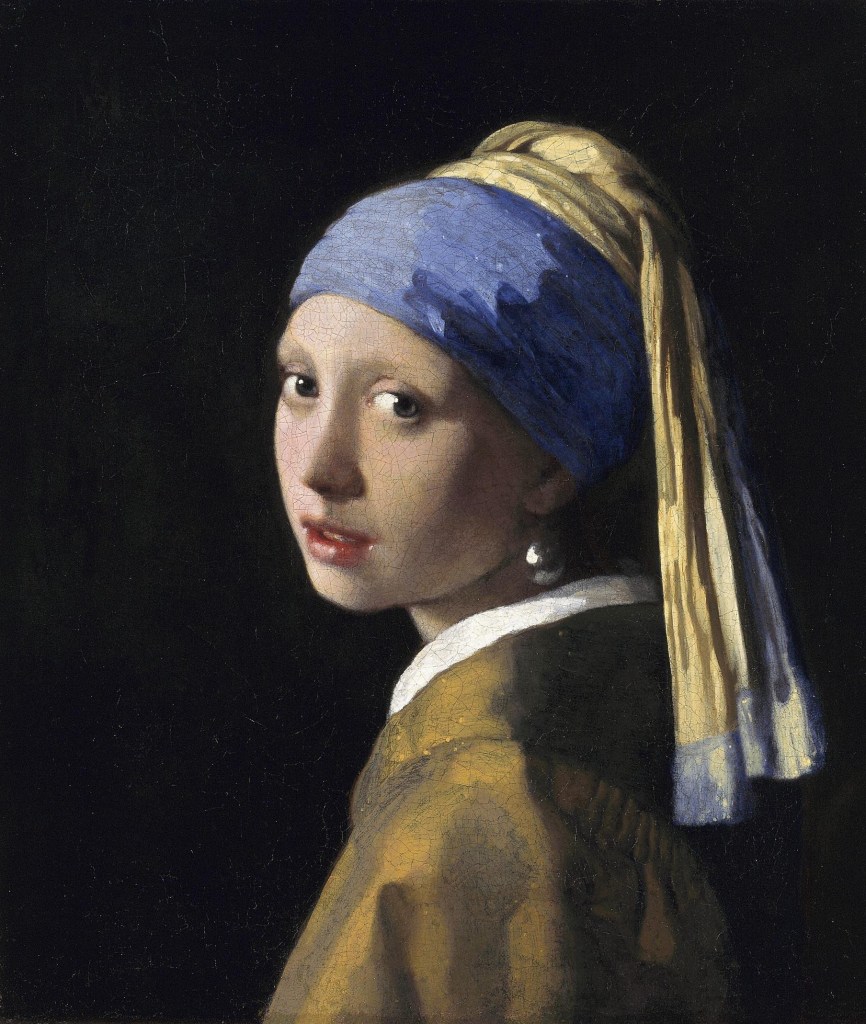
I’m fascinated by the way various artists have remained creative within the limits of a locked-down world. Photographer Julia Keil has taken it upon herself to create self-portraits that are inspired by paintings, films, or other photographs. As she explained, “Each day, I decided on a portrait – I’d immerse myself into that world.”

A series of these portraits can be seen in a BBC News article from yesterday; I highly recommend a look. Her photos are immersive and powerfully evoke different moods and atmospheres. It reminds me that we often become more creative within constraints, and that freedom lies within our imagination.

One of the paintings that inspire Keil

The right words

I feel like sometimes the universe hears you, and responds in kind. I had lamented in yesterday’s post my dislike of meaningless phrases and unhelpful comments. Today, a friend proved to me the power of the right words.

I’m having a bad day. I made the mistake of listening to an NPR segment about the devastating effects of the lockdown on the live music industry, and that just sent me into a tailspin. I had already had one breakdown before I set off on my standing Tuesday afternoon date.

My friend Lilly and I have been doing our socially distanced walks for weeks, and it’s been a good way to get some fresh air and vent our frustrations. And today I vented, because I’m sad, and worried, and angry, and scared. I was blotting tears with my sleeve as we walked.

Her response was simple: it sucks, I don’t know what to tell you because there’s nothing I can do that’s going to make it better, and I can’t even hug you right now, which sucks too, but I love you.

Sometimes the right words don’t try to solve problems, or offer some platitude, or make vague promises of a better future. Sometimes it helps to say, yes, this is not good. And there’s nothing you or I can do. And that all I can do is be your support, to be your friend.

Truth is a comfort. Simplicity is a comfort. Friendship is a comfort.

What things do you take comfort in?

My task today: try a new stretching class online. I’ve been good about running and doing some plyometrics and using exercise bands, but yoga and stretching have kind of gone out the door. (not done…yet! But the night is young…)

Humbug

I’ve started this post 3 times and stopped because I was trying to moderate my tone and I didn’t want to come across as a cranky mess. But then I realized that I’m cranky today, and I’m trying to be true to my present, so here goes and bear with me.

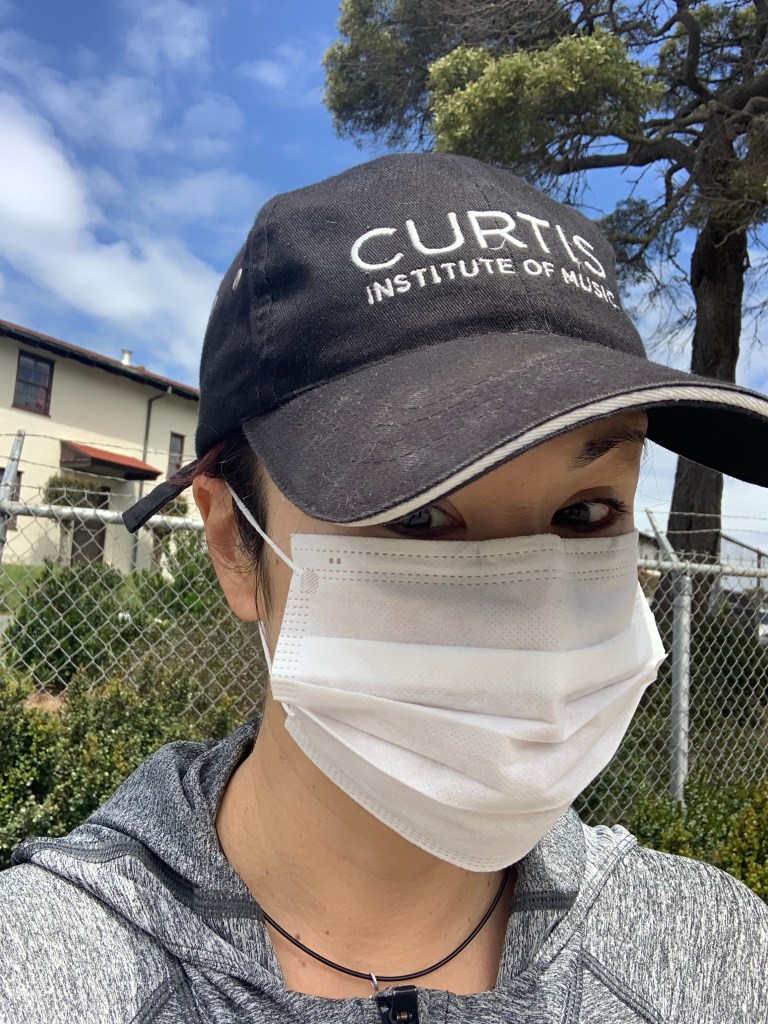
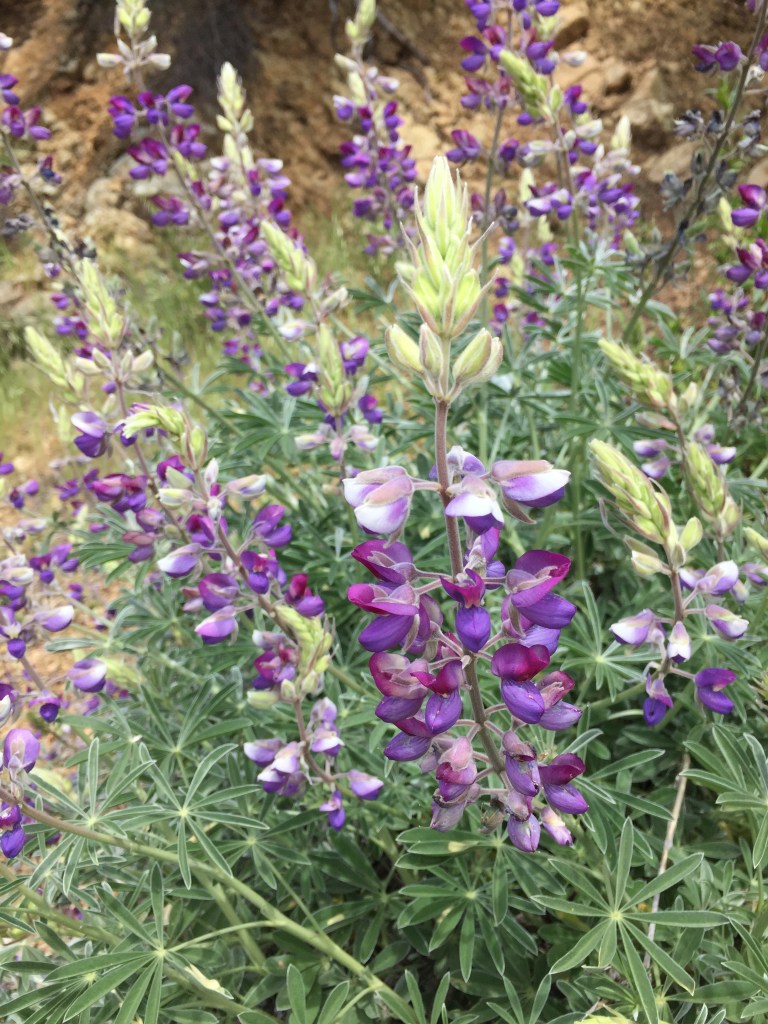
One of the things that makes me less cranky. BTW, yes, all of the shots on this blog are mine.

Lately, both on social media and occasionally in person (well, on Zoom, but you understand what I mean) I’ve shared some of the challenges I’m facing and have heard “Oh, I know exactly how you feel!” and that is just my least favorite phrase, ever. And I dislike it intensely because it’s both presumptuous and untrue.

I’m a mid-career conductor whose gigs have been canceled through the summer and who doesn’t know when they’ll be able to work again. Unless this is also your situation, there is no way you know how I feel. Just as I don’t know how a mother of two trying to homeschool and work from home feels, or a CEO who just had to furlough 50% of their employees feels (and I know people in both of those positions), one cannot ever completely be in another’s shoes.

Knowledge of a person’s internal world is presumptive. Completely understanding someone else’s experience is impossible. I understand the sentiment behind this statement, and you could argue that I’m nit-picking over semantics, but I’m a person of words, words are important, and clarity of words is important.

I think there are kind and compassionate responses that are more helpful. For instance, if someone shares with you that they’re worried about their finances, or the health of aging parents, an effective response might be “I share that worry! How does it affect you? And how can we support each other in this shared worry?”

I try to be mindful of how I use my words, because clarity of communication is the best way to understand and help each other. When we toss out phrases that diminish the other person’s feelings or turns the focus towards ourselves, we’re doing no favors to the people who reach out to us.

What are some of the phrases that you hear on a regular basis that bother you?

My task: I’ve been in a bad mood all day, and being glued to the computer doesn’t help. This is the kind of day when it’s hard to motivate to go for a run, but it’s exactly when I need to go for a run (done!)

TV or not TV

Actually, that wordplay feels a little outdated as a majority of us consume our popular culture on different screens, but you get the idea!

On a Zoom happy hour yesterday (remember when that was a radical/novel idea a month ago?) we were discussing the shifting role of technology within the context of worldwide quarantine. While topics like the move to virtual workplaces and the necessary increase of using screen time for social interaction were covered, the question for all of us was the long-term effect posed by this disruption to in-person social interactions.

There are some interaction that cannot be virtual!

Don’t get me wrong; I’m coming from the basic and universal understanding that humans crave and need actual contact with others, and that virtual interactions and relationships don’t fulfill that need. Human contact is crucial to mental health. And there have been multiple studies of how the growing number of connections we have online does little to mitigate the loneliness that many feel.

We can assume that most people will return to in-person activities and interactions when it is appropriate and sanctioned. All that being said, here were the larger questions:

Will our current reality change the way in which we use technology to connect? For instance, while we will eventually be able to socialize regularly with the friends who live close to us, will we continue to use platforms like Zoom to connect with friends across the country on a regular basis?

Will it change the way in which we use technology to consume culture? For instance, while the continued uptick in streaming services has been ringing the death knell for movie theaters for years, will our newfound experience of total dependence on online options forever change our theater-going habits?

And closely related to this, will it change the way we use technology to interact with art and artists? Of particular interest are the countless virtual performances by musicians of all genres, and from concert pianists to DJs. While they are not necessarily the same as attending a live performance, does our current situation reframe the concept of what we consider a public performance, and how can performing arts organizations and individual artists use this new perspective as they move forward?

And finally, while adults may have a basis of comparison when viewing our socio-cultural situation as it stands, will our current situation have lasting impact on children, especially younger kids, whose limited experience makes online classrooms and virtual playdates a huge part of their known reality?

So I today I pose those very questions to you.

My task today: there are so many mundane tasks that cannot be done virtually, and cleaning the apartment is one of them. Fortunately, my husband and I have gotten organized enough to dedicate a good chunk of time every week (ie Sunday afternoon) to get it done, and have assigned each other the activities we find most onerous (I have an intense dislike of vacuuming and putting away laundry. He hates cleaning the shower and folding said laundry.) Just starting the process now but I know it will be (done!)

A point of view

A conversation with a friend today made me revisit the concept of the artistic temperament, and the place of the artist in the world.

There are a lot of familiar tropes out there – artist as tortured genius, creativity as a reaction to trauma, the need for expression as a sign of insecurity in self. And while some of these are true some of the time, they are applicable to any non-artist as they are to an artist.

What makes an artist an artist, fundamentally, is a desire, willingness and ability to communicate a point of view. This can involve the creation of a new work or it can be a presentation of an existing idea from a different perspective (I would put the interpretation of existing music, which is what I and other classical musicians do, under the latter category).

The artistic need to communicate a point of view could come from the desire to provoke, or provide a different opinion, or establish commonality and therefore confirm a shared humanity. The motive is rarely to simply create something pretty. And equally as rare is expression as a purely confessional device.

I suppose I’m writing these things – as much as for myself as for other performers, visual artists and writers out in there world – as a reminder that we have a responsibility to create those spaces for people that allows them to experience their environment in a new way, to be transported into another world, to embrace a different depth of emotion, to feel seen and understood in the world, to sense the connection to each other and to us.

And we need all of those things right now. My fellow artists, our work is cut out for us. How will you respond?

My task today: to reconnect with a childhood friend that I’ve been meaning to talk to for weeks. Zoom happy hour! (done!)