5 tips if you’re experiencing depression in the age of Covid

The Covid pandemic and the subsequent lockdowns have been challenging on so many fronts, and being cooped up at home, dealing with financial stress, and the general breakdown of life as we know it has affected our collective mental health. Many of us are dealing with depression, and I though it would be helpful to share some tips to help you through these troubled times

  1. Stay in a dark, quiet place

A bedroom with blackout blinds is ideal. If you’re depressed, you definitely want to create an environment that’s dim and inert, to match your mood. Lack of stimulus is really helpful, and being in dark, silent immobility will be especially helpful in supporting the excessive ruminating and isolation that is such an important part of maintaining that depressed mood! Spend as much time as you can in your bedroom, with the covers over your head, or better still, with earplugs. Bonus points for curling up in the fetal position.

2. Avoid contact with family or friends

Being in touch with people means you have to expend energy, and you definitely want to conserve it for pulling those covers over your head. Conversation can be really disruptive to the ruminating and isolation we were talking about, and takes time away from those spinning, dejected thoughts. And reaching out to friends and family means you’ll need to examine your feelings and talk about them in the open, and that’s just so much work! Far more efficient to keep it all bottled inside. Besides, your loved ones are just pretending to be concerned, and helping others in need doesn’t feel good at all. Make sure you resist their attempts to care about you.

3. Don’t bother going outside, particularly in nature

First of all, sunshine will increase your vitamin D, which might do things like prevent osteoporosis and help your immune system. You really don’t need those things anyway, so why bother? Being out in nature might give you too much oxygen saturation and boost energy, and, again, you don’t want to be inconvenienced by too much energy. Remember, being still and isolated and quiet as possible are the way to go! Besides, you might be stimulated by everything around you, or encounter a Golden Retriever puppy, and that level of unbound enthusiasm and cuteness would be an unnecessary assault on your depression.

4. Make sure you completely inhibit movement and exercise

First of all, who has time for exercise? There’s just too much to do during lockdown! Besides, any cardiovascular activity will raise your heart rate and improve blood circulation, and you really want to avoid anything that may give you too much energy, or boost your mood. Yoga requires too much breath work, stretching might make you too loose and flexible, and walking forces you into that unnatural upright position. And finally, exercise can releases endorphins which can trigger positive feelings, and that would definitely threaten the integrity of your depression.

5. Maintain a high-carb, high-fat diet

So-called “healthy” eating is so overrated. I mean, eating foods chock full of omega-3s and vitamin B might improve red blood cell formation and and reduce inflammatory response, both of which might get you brain functioning too well. You want to keep your mind as suppressed as possible as this will help you maintain your depression. Far better to subsist on a combination of Cool Ranch Doritos and Peanut M&Ms. This will keep your blood sugar racing up and down, and give your body something interesting to do. And of course, caffeinated soda right before bed is fantastic; it will keep you focused while you’re battling your nightly insomnia.

I can tell you from experience that these 5 steps cover all your needs if you are experiencing depression during this pandemic! I hope you find them helpful!!
You know I’m kidding, right?

Minding the gap

I was looking over my upcoming schedule today – a colleague is teaching a seminar at the SF Conservatory and wanted me to lead part of the discussion – and as I glanced over the last few months and the next few approaching ones, I realized something. I still have a gig in September that hasn’t yet been canceled. And if I end up doing it, it will have been six months since my last concert.

I know I’ve blogged about this previously, but this enormous gap was realized anew today as I stared at my schedule (something I generally try to avoid). I’ve had friends of friends tell me that I should treat this forced break like a much-needed sabbatical. I can’t tell you how much that frustrates me. The devastating financial fallout aside, for a musician to not be performing for so long – it’s like having a part of myself missing. Let me explain.

(Photo by Deborah Coleman / Pixar)\

First, I want to dispel the notion that music-making is all about self-expression. Most of us professional musicians spend enough time preforming upbeat tunes when we’ve lost a beloved pet, or delicate melodies when we’re furious at the state of the world, or romantic works when we’re fighting with our partners, never mind the times we have to convincingly play a piece of music that we hate performing. Yes, music is expressive, but oftentimes we performers are expressing that music, not necessarily ourselves.

Rather, for me, it’s this: we as performers are accustomed to externalizing our internal energy. We draw upon our memories of joy, or love, or anger, or sorrow, and channel it through the creation of sound, the performance of music. So we are not just “expressing ourselves” in the moment; it’s more that we’re communicating our own thoughts and reactions and energies through music.

It’s this form of communication that I miss, the sense that I can get a point across, wordlessly, just through the gestures of my body that conjure the harmonies from the orchestra. To take an internal impulse – a thought, a feeling – and to find a way to translate that into the energy of a sound – it’s extraordinary. When I perform I’m literally saying to myself “Out, out, out!” (in a joyful, rather than banishing, way) – sending that spirit into the world, and feeling and watching its visceral effect on people.

And that’s not even touching upon the intense connections that I hold with musicians in front of me, the energy exchanged, the music shared.

When I stand on a podium, gather everything inside me and reveal it through motion to an orchestra, who in turn take in and reflect that energy into a packed hall – this is when I feel understood. This is when I feel known. This is when I feel most connected to humanity.

I’ve not had this for over 3 months now, and the thought of not experiencing that connection for another 3 months, probably more, is more painful than I can adequately explain.

One of those days

This has been one of those days in which I start three different blog posts and am dissatisfied with all of them. Partially this is because I’m aware of the fact that when I write, I’m not doing so solely for myself, but with the hope that I can share something that might resonate with my readers. So in a way I pressure myself to create something for an audience, which I suppose is antithetical to the notion of a diary! But here we are.

So, I’m just going to tell you what’s on my mind today, if that’s OK with you. And what’s on my mind today is a conversation I had earlier this week with someone with whom I’m beginning to develop a project. They are of a different generation (a few decades older than me), and perhaps not as skilled in addressing and discussing mental health issues as has come to be expected in this day and age. I’m going to call them X.

I was trying to explain the idea that music is experienced differently (and certainly feels different from a performer’s perspective) when one is in different mental states. In my case, I was describing the different perceptions of music I had when I was in a depressive or manic state.

X’ response was along the lines of “Well, being manic probably feels pretty good, right? Like you have a lot of energy? I bet you get a lot done!”

I live with bipolar II, so my base state tends to stay in the depressive end of the spectrum. Before my current medication protocol, I would experience regular (every month or so) hypomanic episodes (from 1-4 days) in which I would inexplicably become full of an uncontrollable, electric energy.

I didn’t need to sleep much, and food became of little interest. My mind had a certain clarity that allowed me to generate a lot of ideas. I would, however, have to write these down immediately as I found it difficult to focus on any one of them. In fact, it would be hard for me to remember what people were saying to me because my focus shifted so quickly.

While I enjoyed being able to increase my running pace and distance dramatically, I also experienced what I can only describe as an unpleasant tingling in my limbs which made any resting position, whether sitting or lying, very uncomfortable. I couldn’t be at ease unless I was moving (you can imagine, then, that conducting was actually soothing to my mania).

Writing came more easily when I’m hypomanic, as did conversation, most of the time – when I was at my peak, because my mind would be moving so quickly, it was hard for me to formulate words fast enough and I paradoxically became tongue-tied. I was highly irritable during these periods, and I had little patience for anything or anyone, including myself. I found myself having to constantly remind myself not to lash out at people.

And finally, my sleep meds didn’t really work when I was hypomanic. Or more accurately, they wouldn’t help me sleep but would rather make me kind of high and even more energized, and I would do things like buy stuff on Amazon that I couldn’t recall purchasing the next morning, or find myself on a treadmill at the hotel gym at 3 am trying to soothe myself and get myself to come down.

I didn’t respond to X with this lengthy explanation, but rather said “There was heightened energy involved, but it was mostly pretty unpleasant”, and left it at that as we continued with our discussion. This exchange did, however, firm my resolve to find ways to have more complete and open conversations about mental health.

So I’m going to continue to pursue the angle of presenting music from the perspective of depression and mania for the project we’re working on. Just having this conversation with a well-educated, well-meaning person made me realize that there are still barriers to understanding mental health issues. Once a totally taboo topic, it feels like it has only recently become a part of the national discourse.

Over the last several years celebrities have “come out” about their anxiety or depression and invariably been praised for their courage. And while I applaud their efforts to shed light on the prevalence of mental health issues, the real courage lies in living with these conditions, and finding ways to be productive, compassionate, and full of life in spite of them.

I’ve always been keen on advocacy, but it has most often been in service of uncovering truths and creating support for others. I’m finding now that advocacy is most meaningful to me when I’m speaking my truth, and inviting others to share in my experience so that we can better understand ourselves, and each other.

And part of that advocacy is bringing my experiences here, on this blog, to share with you, and I feel grateful for each of you reading this post and for being a part of my journey.

Explaining my headache

I’ve written frequently on this blog the fact that those of us in the performing arts have been disproportionately affected by the lockdowns and social distancing mandates of the pandemic. I, like many of my colleagues in music, dance, theater, as well as those who work in the film and TV industry, suddenly saw all of my work disappear for the foreseeable future.

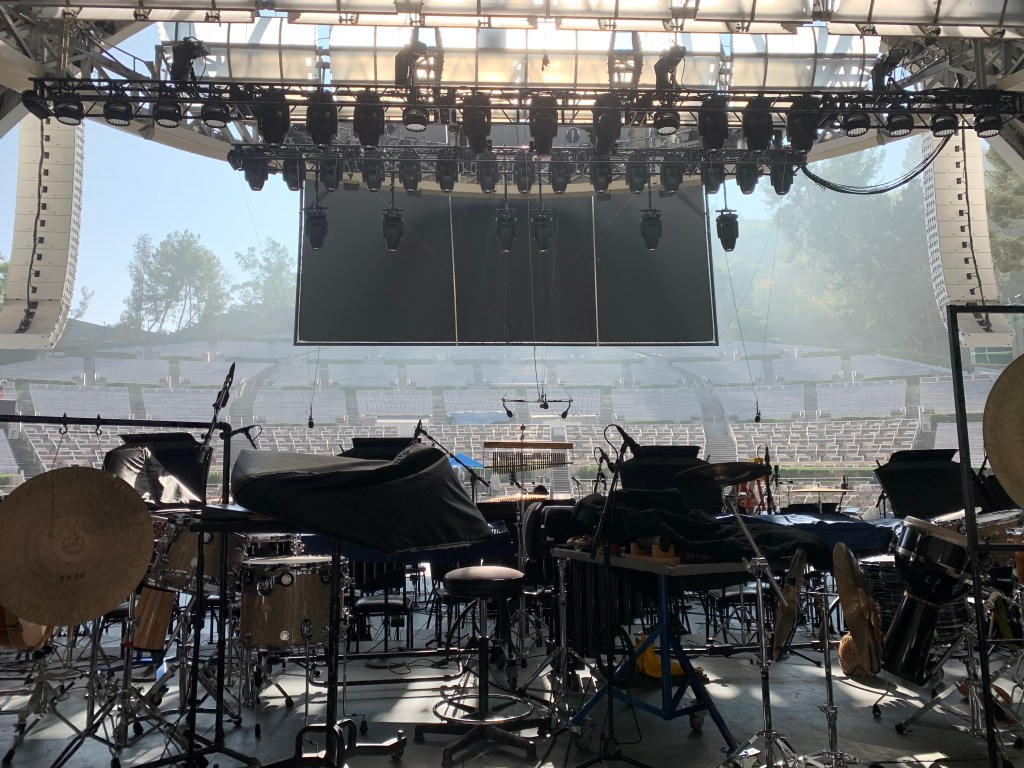
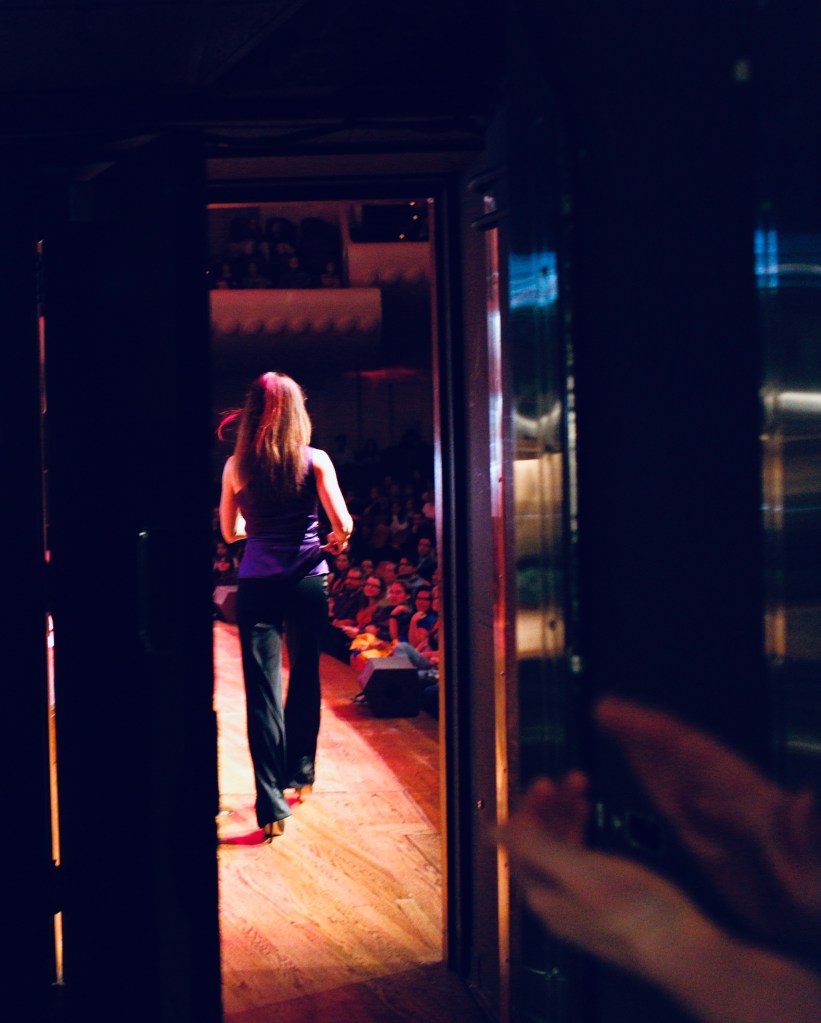
A view from the stage

While people may immediately grasp the impact of the cancellation of all live performances on performers, what many don’t consider is the impact on those behind the scenes. Performances can’t happen without sound engineers, or stagehands, or arts administrators or set/costume/makeup designers, technical directors, producers, orchestral librarians, front of house – ushers, concession workers, box office – drivers, videographers, arrangers, caterers, security, and so many others. Not to mention artist agents and management, without whom the complex booking, contracting and scheduling process would be would be a nightmare to navigate.

I have many friends in these non-performance roles in the music business, and many are suffering, and some are feeling hopeless, and I worry about their mental states. And I’m hearing more and more that those on the administration side of large arts organization are being furloughed or let go. My free-lance musician friends are trying to scrape by with online teaching and whatever they can do in the virtual medium, but it’s not sustainable.

Those on the technical and production side of things may have had some work to complete when this all started, but with so many projects on hold, they’ve since been sitting on their hands. I’m working with some arrangers planning for a future show that might not even happen, or happen a year from now, and we don’t know when or if we’ll get paid.

Then there’s this, that most people not in the business might not consider: many of the performances that would have happened in these many months of lockdown have been rescheduled for a later date (most probably in 2021). Great! They’re going to eventually happen!

Ah but here’s the rub. The orchestra world works on a 12-24 month cycle – that’s to say, planning for ’21-’22 would be happening now. Other presenters and productions follow a similar schedule. Right now no one can really plan for the future not knowing what the future will be. And seeing that so many performances that would have happened this spring have been rescheduled for spring of 2021 and beyond, there’s much less possibility for any new product/new gigs being scheduled.

Which is to say, the whole mechanism of planning and scheduling performances has been completely disrupted. This puts musicians in the lurch, because while we may have some reschedule concerts on the docket, the probability of anything new coming in diminishes considerably. And we need a steady stream of new bookings to know that we’ll be able to survive into the future.

And finally, let me remind you that an orchestra, in and of itself, is a social distancing nightmare. Even if we are able to have a hall at 30% capacity, we can’t play a concert with the orchestra at 30% capacity. It doesn’t work that way. Even coming back in steps, perhaps in the fall, is an unbelievable logistical headache, and in some cases insurmountable.

I know the entire world has been disrupted. I know in the US we are contending with the slow re-opening of the country while experiencing a social upheaval the likes of which hasn’t been seen for generations. There are other issues on my, and everyone else’s, mind. But in the last few weeks I’ve just had one too many exchanges with people who have given me the “Oh, people are going to be so excited to be able to hear live music again! They can’t wait to go to shows! Your industry’s gonna be fine!” speech.

While those are lovely sentiments, and I appreciate them, my pragmatic side tells me that they do not reflect reality. Many organizations will go under. Many will not be able to return at the same level as before, and may never regain their pre-pandemic concert schedules or their budgets. Those on the administrative and production side who have been let go will have challenges finding positions. Those who are currently furloughed may be let go.

As long as venues can’t be at 100% capacity, the ability of any presenter – and thus any artist – to make a sustainable income is in question. And if presenters and/or management go under, the issues grow exponentially.

Yes, as with everything, things will work out in some way, at some point, and short of an asteroid striking earth, yes, we are going to be fine. Performances will begin to happen more regularly and the world will keep turning. And maybe some of the creative solutions we’ve found in isolation will become a more regular feature of the future of music. I’m not trying to be a pessimist here!

It’s just that right now I’m encountering a lot of people who are making a lot of assumptions about the business of music and saying how in no time at all live music will come back to lift our spirits. And I’m thinking of the countless people in this industry, both on and off stage, who know that while we’re looking forward to that eventual future, the road is far less linear as many imagine.

This is all to say, we want to be onstage as much as you want to have us onstage. But the reality is far more complicated than simply resuming what we were doing before, and sometimes it’s hard for me to hear these well-meaning idealizations.

And that, my friends, is what’s causing me some pounding headaches this week.

Thanks for listening to me vent, though, that really really helps! Perhaps the headaches will go away…

Actions

The state of the world continues to pummel us with bad news, cities in upheaval, wounds reopened, daily clashes. It’s a continual pile of awfulness on top of awfulness upon awfulness.

When terrible things are happening, it seems that our greatest challenge is our own powerlessness. There’s nothing we can do to end the pandemic. There’s nothing we can do to end systemic racism. There’s nothing we can do that is going to make us feel better.

When the problems are so enormous, there seems no way out, because we are hoping for a comprehensive solution that will solve everything. What we really need to look at is something far less complex and overwhelming.

Life is cumulative. It’s the end product of countless small decisions made by countless people, an outcome of a million billion individual actions. And when we think about that, we realize that we do have power, because we have authority over our own actions – one of those million billion that makes the world what it is.

When I’m overwhelmed by the problems of the world, I strip it down to this – what can I do, right here, right now, that would make it even an infinitesimal bit better?

I can’t take away the pain of unheard voices. I can’t change injustice. I can’t change the world in one fell swoop.

But I can use whatever skills I have, in whatever way I can, to create the smallest moment of understanding. And that is a step, that is an action. And I believe there are enough people out there who will choose to make their own steps, their own actions. And that we will move the world together.

78 days

I started this blog at the beginning of lockdown in San Francisco, and my original commitment to posting daily was to have ended in 21 days. Of course, that was extended, and multiple times at that – so here we are at June 1.

My intent was to wrap up my daily posts yesterday, but the events of the weekend – both across the country and in my own personal world – took my attention. So now I find myself this evening, June 1, 2020, going over 77 days of posts and trying to decide if there’s any way to sum up my experience in this ongoing pandemic, and the once unimaginable ways in which our world has changed.

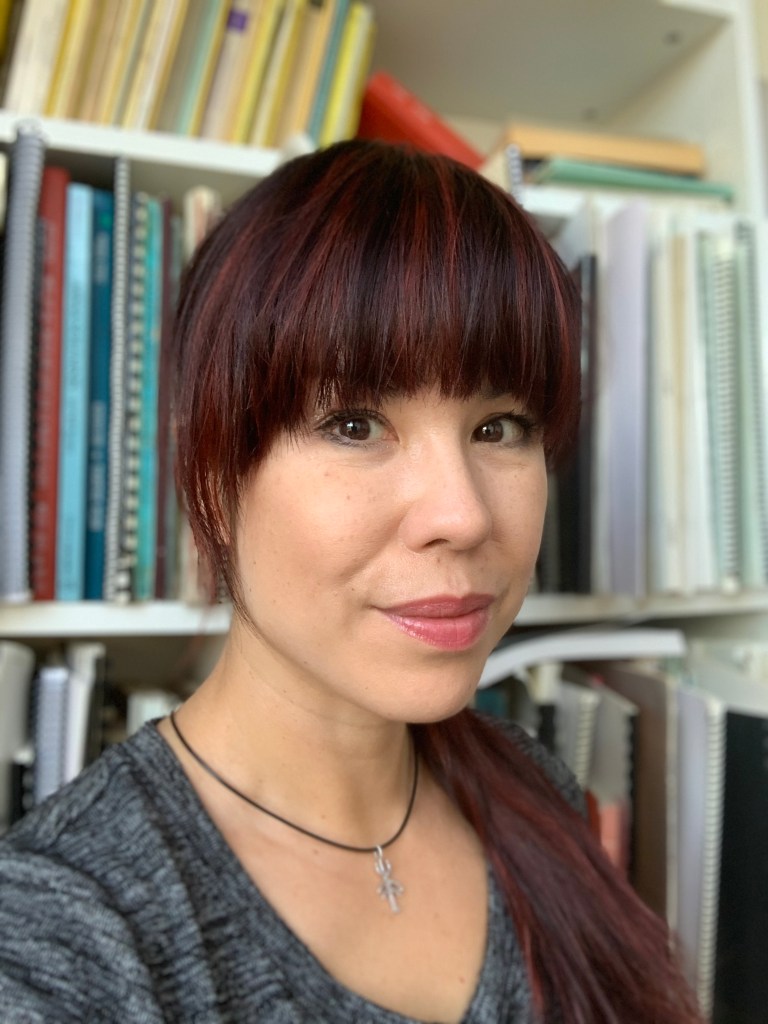
Me on Day 1 of lockdown

In many ways we seem to be in a worse position than when all of this began; as I type, I’m witnessing my country teeter on the brink of dictatorship and our divisive president spew some of the most outrageous and incendiary rhetoric I’ve ever heard in this country.

As you can surmise from my last week or so of posts, it has been a rough 10 days for me personally, the chaos of this country aside. I’ve been struggling with my own stability, which has been exacerbated by insomnia (which becomes a vicious circle). The addition of acute stress (Pinkerton’s accident, rioting, the death of my friend) to chronic stress (lockdown/pandemic) would put a strain on any system, and I have to be particularly mindful of the vulnerability of mine.

What can I say at this point?

Well, three things have become clearly apparent.

First, that the stress of the lockdown and now this civil unrest is enough to cause anxiety or depression for those without chronic/preexisting conditions. For those of us who live with GAD or panic disorder or major depressive disorder or bipolar, the effect is magnified exponentially.

It is critical, absolutely critical, that we practice the appropriate self care measures and be vigilant about any medical protocols. To not prioritize these things is not just detrimental to ourselves, but can have devastating impact on our loved ones. Our first priority is to look after our own well-being so that we are able to participate in the lives of others and do what we can to make a positive impact in our communities.

Second, that art, and music, is absolutely crucial in times like these. Art is not an indulgence, a flourish, an unnecessary extravagance. Music is what comforts us. Music is what connects us. Music is the personification of the good that is possible in the world. Music is the representation of the best parts of humanity. And we need to be reminded of those best parts to bolster our hope for a better time and to remind us of the good within all of us.

Finally, that the last 3 months have forced me to reframe a though that, try as I might, has dogged me throughout the years. I’ve experienced enough trauma (abuse, suicide, serious health issues) and made it to the other side to know that I have the resilience to survive a lot of things. But that doesn’t diminish the first thought that leaps up whenever I’m struck with another blow: Why me?

I’m sure we’ve all felt that before. And it’s only human to feel that we’ve been singled out to experience a hardship. It doesn’t feel fair.

Here’s the most important thing I’ve learned over the course of writing these 77 days: Why NOT me?

Things happen to us, things over which we have no control. And most often they happen without judgment. They don’t happen to make our lives difficult. They don’t happen to make us unhappy, waving a fist at the sky. They just fucking happen.

“Why me?” implies purpose, and there usually is none. Adversity doesn’t come with purpose. And when we can approach without judgment, we realize the real question is “Why not me?” Which ends up to be the most liberating question you can ask yourself, because it frees you from believing that bad things happen to you because you’re a bad person, or that bad things happen to you because the world is wicked and cruel.

Shit happens because shit happens. So why not me?

Thank you for coming along this particular part of the ride, my friends. I want to be clear that I’m not done with this blog. Rather, I’m moving away from the daily post format. While I enjoy the discipline of daily writing, by necessity it requires me to write in shorter form, because I only have so many hours a day to devote to it. I hope to keep discussing the effects of the pandemic on our lives, and our mental health, posting Monday and Thursday.

I also hope to return to writing on my other blog, Work Still in Progress. I’m going to be starting a different project there, with multiple parts, that I’ve wanted to pursue for several years now; I’ll let you know when I get that going.

It all feels like too much.

I fully intended to write a long post today – there’s so much to download about the state of the world and the state of my mind. I’d even drafted a few paragraphs. Then I was told of the death of a friend.

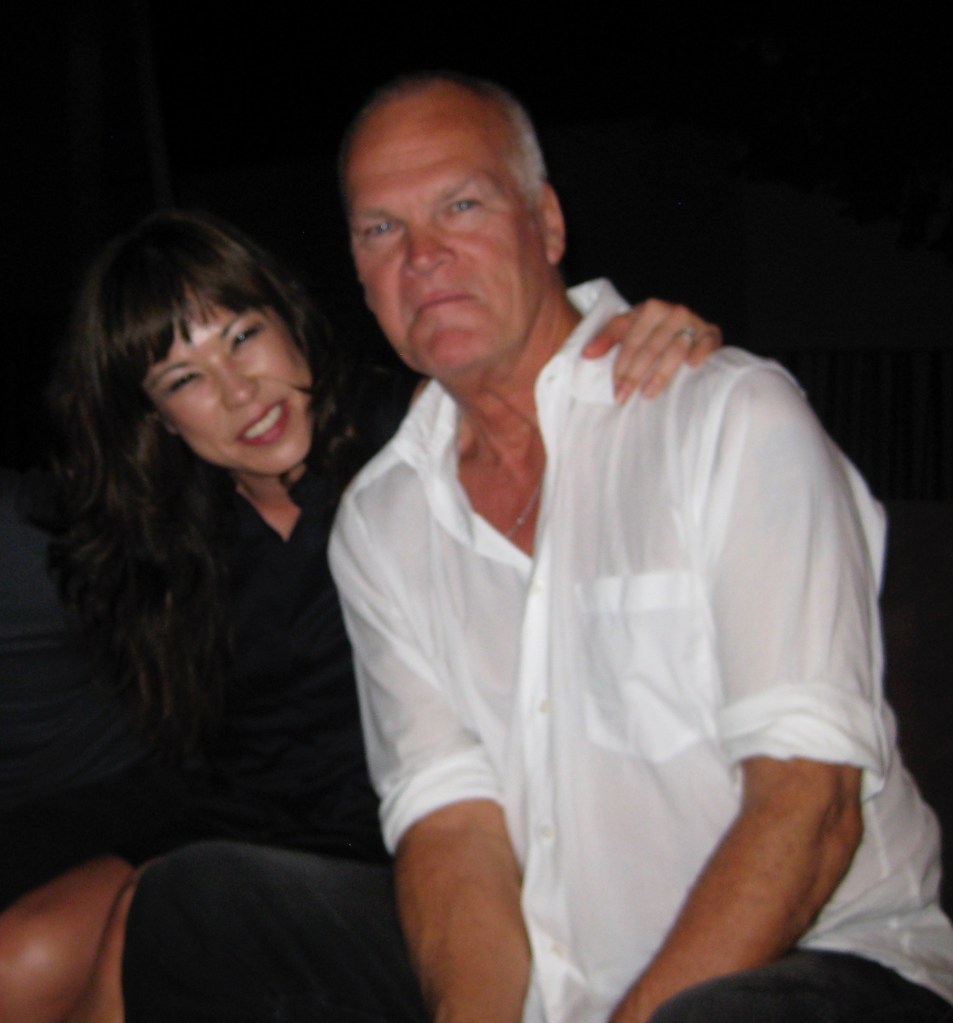
You never did like the camera, Mr. Francis

Billy Francis was Sting’s tour managers for 40 years; I had the privilege of being on tour with Sting over the summer of 2011.

Billy was everyone’s rock. He handled everything – transportation, emigration, schedules, security, room assignments, car assignments, making sure that everything was done, and done right, and done on time. Totally no-nonsense, a tough-guy presence that belied a huge heart, a wicked sense of humor, the best person to hang with for a post-concert drink.

I adored Billy, and we’ve seen each other many times since that summer. And now he’s gone.

I’ve spent much of the last 10 days both devastated and heartbroken. Loss is a part of life, death is inevitable, but right now I feel ill equipped to be at peace with those facts. I only have tears tonight.

A day off

You’ll have to forgive me the day off – it’s my wedding anniversary. And important one. In the middle of a pandemic, on lockdown. With a dog one week out of emergency surgery. At a point we have absolutely no funds to do anything but pay our rent, insurance and basic groceries.

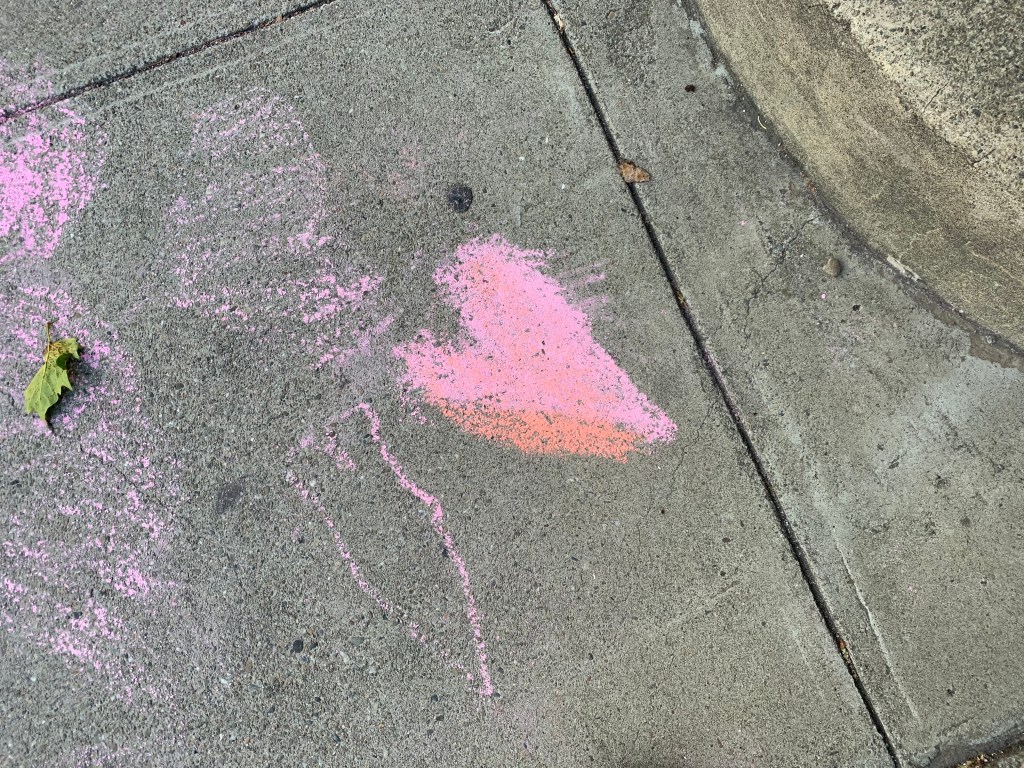
Our friends, our extraordinary amazing friends, brought us a beautiful dinner, champagne, flowers, and their kids took chalk to our sidewalk. I’m touched, grateful, but most of lucky to have a partner who has been with me through the worst and best of times with nothing but love.

Enough

The world feels bleak to me today. Bit by bit my work in the fall is officially being rescheduled or cancelled. I’m horrified and angered by the murder of George Floyd. My once carefree, athletic little dog is confined to his bed for the foreseeable future. Political leadership continues to spread outright lies on Twitter (although Twitter swung back.)

Pink believes in freedom of press BTW

Sometimes I just want to say, enough. Enough. I’ve had enough. The world is a mess even without this pandemic. I’m a mess. I’ve not been in a good mental space all day, and the continued cruelty and stupidity of what happens in the world feels overwhelming.

I know what you’re going to say. We need to practice gratitude. We need to look to a more long-term future. We should believe that these challenges will foment positive change and bring the world together. Life and music will return. Look at the bright side: your dog is alive. Hey, look, you can still pay rent, unlike some people we know.

And it’s not that any of these statements are unreasonable, or untrue. It’s just that sometimes, it doesn’t matter, because they don’t make me feel better right now.

I think it’s important to feel awful sometimes, to feel hopeless, to feel angry, to feel despondent. It’s important to understand that you don’t need to reason or cajole or meditate or whatever yourself out of those awful feelings. And we are often too eager to not fully engage in those uncomfortable emotions, eager to find ways to put them aside.

And this is what I want to say to you: sometimes it’s good to say, enough. I’ve had enough right now. To say, I don’t need you to tell me to look on the bright side, or that better days will come, or that I should be grateful. It’s OK to really sit in those awful feelings, and to feel angry and powerless. Because unless we can acknowledge their existence, recognize them as our own, and fully feel them, we can’t authentically be ourselves, we can’t authentically be human.

And when we can fully accept these feelings, we have the tools to be able to work through them, to work beyond them. And that’s a whole other post, and something I don’t want to write about right now.

Today I just want to say I feel deflated, and despondent, and that it’s ok.