What I did this pandemic

So, Taylor Swift is dropping a new album tonight. Artist release albums all the time, of course (that’s what artists do!) but the catch here is that she wrote, recorded and released an album all during these 5 months of lockdown.
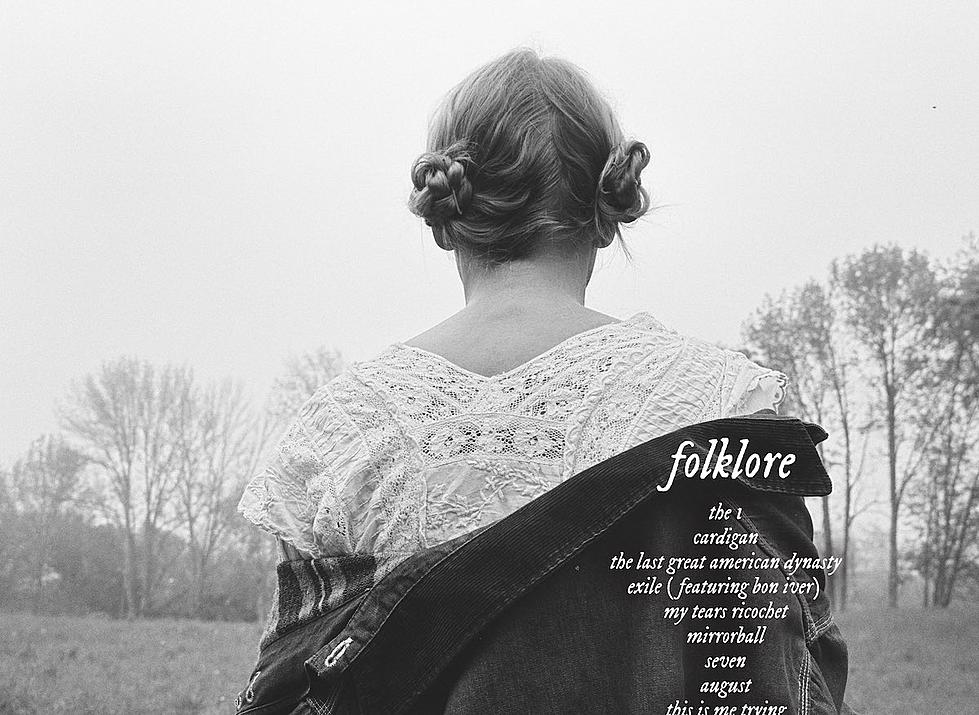
Now, I’m a big fan, so this is great news. The music-consumer side of me is delighted to have something new to listen to.

The musician side of me reacted with a noxious combination of resentment and guilt.

When the shit hit the fan in March and our lives were put on pause, many of us, in an effort to find a silver lining, made grand plans to use this opportunity to do something we had no time to pursue pre-pandmic. Maybe we could finally clean out our closets, learn Italian, write a novel, take that online art course, read to our kids every night, meditate, lose weight, bake the perfect sourdough levain. Many of us were ambitious.

The reality of quarantine, of course, was anxiety and inertia.

And the truth of it is that my closets are still a mess and my Italian hasn’t improved. I feel like I get lost in the fear and frustration of our current global situation on a daily basis, and therefore don’t get anything done. I feel like I’m not producing anything, not generating income, not acquiring a new skill, not improving myself, not taking advantage of “down time”. And at the same time, Taylor Swift made an entire freaking album.

Comparisons are useless, of course, but that doesn’t mean that our minds don’t go there. And when we do so we can’t help but feel lacking in some way. It’s at the core of my own constant struggle, of not doing enough, of not being enough. And it can send me into a tailspin.

So today I’ve decided to practice some acceptance and to treat myself kindly. To find contentment in the simple acts of getting up, making coffee, caring for Pinkerton, supporting my husband, being available for my friends. To keep my gaze firmly on the day that is front of me, my own day, the one that only I can live. To move from comparison outward to focus inward.

But of course, at its 12 am ET release, I’ll be downloading that album!

Self (un)awareness

Pinkerton is improving by leaps and bounds. It’s hard to imagine that 2 months have passed since his accident – like everything in quarantine times, it seems like both yesterday and last year, all at the same time.

That he can walk, run (albeit crookedly), have a ball-chasing instinct, climb the stairs we bought for him to get up on the couch – it feels miraculous to me, given that his hind legs were fully paralyzed eight weeks ago today. We’re in the midst of starting some physical therapy – stretching, balancing – to get the nerves firing and to help rebuild his weakened right hind leg. It’s a process.

I don’t think he realizes that anything is different.

Dogs are blissfully self unaware (or is it unself aware? that doesn’t sound right to me). They aren’t comparing their present with their past, or bemoaning a loss, or anxieties about future pain. It doesn’t matter that Pink is not ready to hike with us on our favorite trails – and may not recover enough to do full hikes in the future – his happiness in in being outdoors, with us, enjoying the sun.

And perhaps he likes being carried around in his specially designed backpack.

As I type, he lounges contentedly on the couch, waiting patiently for me to give him dinner, to scratch his belly, unconcerned with the scar across his back, his slight limp. And I try to live moment to moment with him.

A word about words

I had a few concerned messages concerning last Thursday’s post, and I just wanted to clarify that my Munch-ian post was a tongue in cheek attempt to capture our general zeitgeist, not some horrible news on my part! Also, fun fact: the original Norwegian title was “Skrik”, or shriek. Also, does anyone else get a Macauley Culkin from “Home Alone” vibe whenever they see that painting?

Also, it brings to mind the exhortation of Japanese amusement park management that roller coaster riders not scream aloud, but rather “scream in (their) hearts“.

OK, on to the main part of today’s discussion.

Words are important to me as a writer. They are even more important now as they offer my major creative outlet during this forced pause in music-making. I try to be very careful about my use of words, because I understand the weight they carry, and and I am sensitive to the way others use them.

As I’ve been spending more time curating my presence on various social media platforms, I’ve received, via comments, DMs, messages from my website etc., more communication from a wider variety of people on a more consistent basis than I ever have before. And there are a lot of words being used that make me unhappy, and I have a feeling that they might make others unhappy too, and thus are worth discussing here.

So, let me dissect one of my least favorite phrases.

It is never appropriate to call someone, especially me, a “young lady”. Well, OK, you could call me “young lady” if I were 16 and you were my grandfather, or if I were 16 and you were my mother admonishing me for some teenage transgression. Since none of these scenarios are true, it’s best not to call me a “young lady”.

“Young lady” is patronizing at best, demeaning at worst. If it is being used as a supposed term of endearment, I would suggest a long, hard look at the meaning behind the phrase, given the nuance of implied authority.

First, “lady” is a British title, or something girlfriends lightheartedly call each other.

Second, “young”. I know I look “young”. I know that “young” is a relative term. However, why are we putting age into consideration? What is being implied?

That because I’m “young” I have “so much ahead of me” (written by more than one well-meaning social media follower)? Well, first off it’s untrue. I am middle aged. At very best I might have as many years ahead of me as behind me, but that’s being a bit optimistic. Second, this comment implies that I’m in some sort of nascent stage of my life/career, when in truth I’ve been in the music for 20 some-odd years, and at this point I am mentoring, not being mentored. By defining me by “youth”, assumptions are then being made about my skills or experiences based on an extremely superficial assessment. And I’m immediately infantilized.

That being called “young” is somehow a compliment? I know I appear much younger than my biological age (by the way, does anyone else feel like they’re permanently 29, or is it just me?), and I suppose that this is beneficial given our society’s obsessive focus on youth. But I don’t need to be reminded of this. There are some marvelous aspects to getting older (as well as the creaks and pains), and being denied the respect of experience and accomplishment and sense of self because of this obsession with youth is painful to witness.

And how is age germane to any conversation that doesn’t involve voting, drinking, or AARP?

As women, we are constantly scrutinized. What we wear, how we wear it, the shape and weight of our bodies, the lines on our faces. We are expected to inhabit some strange world of permanent youth, an impossible suspension of time. We are judged by our appearances – as if toned biceps (but not too muscular, please) and wrinkle-free eyes (thank you Botox) were some indication of competence or character.

As all women, I’m on the receiving end of constant commentary that belies this scrutiny, no matter how well-meaning. It is belittling. It is exhausting. It is infuriating. And there are so many ways, and on a daily basis, that we live with these indignities, big and small.

Which is all to say, please, please, never call me a young lady.


Thought on Time

All of a sudden it’s July and in a week it will be 5 months since lockdown began.

I’ve often heard that time seems to speed up the older one gets. I don’t think it has anything to do with the vagaries of the space-time continuum, or some sort of mystical notion. Rather, it’s a matter of proportion and experience; the more days we have behind us, the greater and longer our point of reference, which in turn informs us in our experience of the present. A year is an eternity for a child who has only experienced six others; it’s comparatively short for someone who has lived 40.

“How did it get so late so soon?” 

Dr. Seuss

But these Covid times have somehow altered my perception of time, and there’s an unsettling unevenness in the way in which I experience a day, or a week. On one hand, there are many days that feel endless, purposeless, the hours dragging. On the other hand it feels like weeks have slipped by in the blink of an eye. And for many weeks I’ve been wondering if I’m an outlier in my perception of time both expanding and contracting.

Feeling that time is constantly warping around me is disconcerting, to say the least. I find myself having a difficult time remembering if a conversation occurred yesterday, or a few weeks ago – the insistent sameness of my days blurs the boundaries. And I’ve caught myself on many an occasion glancing at my watch and being surprised that so much/so little time has passed, defying my perception of it.

I’ve experienced a fluid awareness of time during meditation, and in my deepest sits I lose the sensation of it entirely, so that the sounding of the bell brings me not only back to my environment but also to the passage of minutes. This kind of fluidity can feel wonderful – as if I’m suspended in stillness and gently dropped back on a calm current of seconds, minutes, hours, as if nothing has been disturbed.

But in these months I’ve also been acutely aware of the sense of losing time, of time being disturbed. I feel the loss of time when I would have been conducting, making music. Time with friends, time with colleagues. Time in the many marvelous cities I frequent. Time when I would have been working, generating income.

And then I have to remind myself of the preciousness of this finite resource. In the aggregate of all the time of the world, our lives don’t even occupy the fraction of a blink of an eye. Time is fleeting. And there isn’t really enough time to be spending time mourning the loss of time.

So I’ve been trying, in my own way, to be more aware of the progression of minutes and seconds and weeks, to be present in them. To not waste my moments now contemplating a moment that didn’t happen. To accept the passage of time, in its ow time.

Nothing so painful to the human mind

“If you dislike change, you’re going to dislike irrelevance even more.”

Former Army Chief of Staff, General Eric Shinseki

Whenever anyone asks me my favorite quote, I gravitate towards the one above. It makes no attempt at elegance or dazzle or cleverness. Rather it is a straightforward statement of a basic truth: that life and the world move on, and it is to our disadvantage if we don’t move with them.

We’ve all been reading about the states in which the easing of lockdowns started early and seeing the images of people standing shoulder to shoulder at bars and clubs. It’s all obviously ill-advised and has led to spikes in infections and hospitalizations. What fascinates me is that these people assumed that they could go back to “normal” life, as it was defined by the time before this pandemic.

I would argue that things will never be “normal” again, in the sense that we’ll return to something we once considered “normal”. Even looking at the word “normal” itself – conforming to a standard; usual, typical, or expected – these are not static things. Standards change. What is usual or typical changes. And expectation must follow the fact that change is a defining factor of normalcy.

One of the things that has been challenging throughout this lockdown is the notion that at some point we can get back to our lives and pick up where we left off. This ignores the fact, of course, that the world has utterly changed, and that there is no way that we can return to a time without Covid. We can (hopefully) vanquish our viral foe, but it has fundamentally changed the way in which we approach public health, the workplace, travel safety, personal responsibility, and countless other facets of life. We can never go back.

I’m not saying that’s a bad thing. Things change. Change is necessary. And the minute we can accept that we won’t go back to something, but rather embrace a new standard, the easier it is to move forward with life.

On a very small scale I look at what happened with Pinkerton – pre-accident he was a extremely active and supremely athletic dog (go find a YouTube video of Papillons in agility competitions. They are extraordinary little balls of kinetic energy). He regularly accompanied us on 7-mile hikes and could outrun almost any dog for a short distance.

After the accident and the successful surgery, he is thankfully on the mend and able to walk. With time and physical therapy we hope he’ll be able to run. But no more hikes, and no more stairs, and no more tousling with larger dogs. The tiny athlete is no more.

From the viewpoint of the kind of life he had before the accident, it’s painful to think about the limitations he must live with post-injury (although to be fair, he’s a dog and doesn’t really care about past or future. The pain is entirely mine, and created by myself). I could be angry and sad about the fact that he can’t return to his pre-accident “normal”. Or I could simply accept that he now has a new “normal”.

Change is hard. In fact, that’s the sentiment of the quote (another favorite) that’s referenced in the title of this post – “Nothing is so painful to the human mind as a great and sudden change” (Mary Shelley). But unless it’s accepted, there’s no way we can move ahead. And so we’ll be left behind.

And besides, I really dislike irrelevance.

Comparisons

I’ve been spending a lot of time on social media. Mostly it’s a very conscious effort to keep audiences and fans engaged, to expand the reach of my professional network, to create online content (videos, interviews) that might lead to future non-performance work, and finally to keep myself focused and functioning and sane.

It’s been an interesting process shifting my energies towards a virtual audience, as well as a steep learning curve in terms of the skill sets required (video editing and production, graphic design). Being active online has kept me occupied, and for that it feels useful.

The flip side, of course, is that I have to spend so much time on social media. To be fair, at their best, these platforms provide useful information, insights into interesting events, humorous/enjoyable content, handy how-to videos, connection with friends and colleagues, a space to look at pretty pictures. But at worst, social media becomes an endless display of life highlights to which we can’t help but to compare ourselves, or a tangle of conversations that lead to divisive name-calling as much as to civil discourse.

As I post on Instagram or Facebook I can’t help but peruse what’s going on in the lives of friends and colleagues. We all realize that social media, particularly Instagram and Facebook, are highlight reels of people’s lives. Yes, there are serious posts – in support of social movements, or to announce a death or illness in a family – but the majority center around fun activities and beautiful settings and happy faces and cute animals and amazing performances and delicious food.

Instagram in particular is a space in which we see very carefully curated versions of people’s lives. For instance there’s a whole genre of female Instagrammers that supports body-postive, “honest” looks at actual (read “non-model”) women’s bodies. You would think that this would be a more authentic way to present the human body, a raw look at reality. But the truth is, even photos of “real bodies” are most often staged and highly-produced images, artful displays of one’s enlightened view of beauty that are ironically still fetishizations of the female form (I could go on about this particular topic for pages, but will stop myself here!).

So much of the messaging on social media is “look at the wonderful things I’m doing”. And I realize that I’m just as guilty as any in presenting the best parts of my life, and myself. But for me (and for many), this creates an environment in which we take in everyone’s highlight reels and compare them to ourselves and our own lives. And we often find that we are lacking.

I struggle with the idea that I’m enough. I’m constantly worried that I’m not smart enough, or talented enough, or compassionate enough, or strong enough, or supportive enough, or loving enough, or lovable enough. It’s something I work through on a daily basis, reminding myself that my mere existence as a being on earth, that simply being ME is in itself, enough.

But the bombardment of beautiful images and exquisitely phrased pronouncements and gorgeously produced videos that I encounter as I put up my own posts on Facebook, or Instagram, or YouTube, or LinkedIn, or Twitter – it chips away at my tenuous acceptance of inhabiting my own mind, my own body, my own life. It messes with my self-perception, makes me doubt myself and my goals.

I’m not sure that there’s a true resolution here. I suppose that, at its core, it points out my need to keep working on my own sense and security of self, to ground myself in my own reality, to focus on and move forward with the things I believe in, independent of anyone else’s actions. Or to put it another way, to “stay in my lane”.

But I’m human, and part of the complexities of humanness is to compare and contrast, to feel anxious, to feel envy, to feel lacking.

As the pandemic eases (although, frankly, we’re in as bad a place as we were months ago, at the purported “peak”), I’m looking forward to shifting my energies back to actual interactions, to live performance, to physical engagement with the world around me. But until then, I’ll be plugging away online with my various projects, all the while attempting to keep the demons of constant comparison at bay.

What to say

Sometimes I can take my own challenges – the fact that I haven’t worked in many months, that I’m terrified about the future of my industry, that I’m constantly anxious about my livelihood – and find some universal message of resilience to write about. Sometimes I can’t even begin to deal with my own feelings, much less share them in a way that’s understandable to anyone but myself.

Today is one of those days where I just can’t find the point to doing anything, where I descend into a level of both existential doubt and hopelessness that defies even the best of my mitigation efforts. And I don’t want to talk about it, because it’s exhausting, because it brings tremendous grief to the surface, because examining emotions is hard work, because I’m afraid if a explain myself I’ll be rejected.

Today is one of those days when I don’t know what to say.

Rough seas

I know that many of you know exactly what I’m talking about, because you’ve dealt with your own depression. And it is you who I think about on days like today. Because there is a commonality of experience that so many of us share, a travail that we understand. Because there are others who struggle. Because there are others who hurt.

When I am too exhausted, too defeated, too depressed to want to do or say anything, the best I can do is to turn those feelings outward instead of inward, to feel empathy for the sorrow of others.

Part of the reason I started this blog was to give myself a space to examine my own mind and my own emotions as the pandemic irrevocably changed life as we knew it. The other part was to be able to create a space where others could reflect on their own feelings, a platform to share words that gave expression to the emotional states of others, a way to let others know that they are understood. And the thought that I may have provided even a moment of comfort or companionship for someone else – I’ll take that as the most important thing I can do

So that’s all I have for you today. The seas feel dark and rough for me today, but it comforts me that there are so many of us in this boat, together. It gives me a small strength, and I hope it does so for you too.